The Unifying Power of a Global Stage
The FIFA World Cup is more than a tournament; it is a narrative engine, a four-yearly phenomenon that writes stories of triumph, heartbreak, and the unexpected. Among its most compelling chapters are those where individuals from disparate corners of the globe find themselves united under a single flag, their personal journeys converging on the world's biggest sporting stage. The story of when strangers become teammates is a central theme of the modern World Cup, a tale told in the universal language of football, where English often serves as the bridge.
The Club and Country Nexus
Modern footballers are global citizens long before they step onto the World Cup pitch. The premier leagues and elite clubs of Europe are melting pots of talent, where a young player from Japan might train alongside a veteran from Brazil, both guided by a Spanish coach. Here, English emerges as the essential lingua franca in the locker room, on the training ground, and in tactical briefings. A South Korean midfielder learns to call for a pass in English at his London club; a Senegalese defender masters defensive positioning cues in the same language at an Italian side with an international squad. When these players return to their national teams, they bring back more than improved skills—they bring a shared linguistic and tactical shorthand.
This pre-existing foundation is crucial. The national team camp, often a short, intense period of preparation, does not have the luxury of time. Coaching instructions, set-piece routines, and in-game communication need to be absorbed rapidly. Players who are accustomed to hearing "drop," "press," "switch play," or "man on" in English at their clubs can instantly translate that understanding to the international context. This common vocabulary accelerates team cohesion, turning a group of talented individuals who may be strangers off the field into a more coordinated unit on it.
Beyond Language: Building a Collective Identity
While shared language facilitates communication, the transformation from strangers to teammates requires forging a deeper, collective identity. This is where the unique environment of the World Cup camp proves transformative.
The Shared Sacrifice and Seclusion
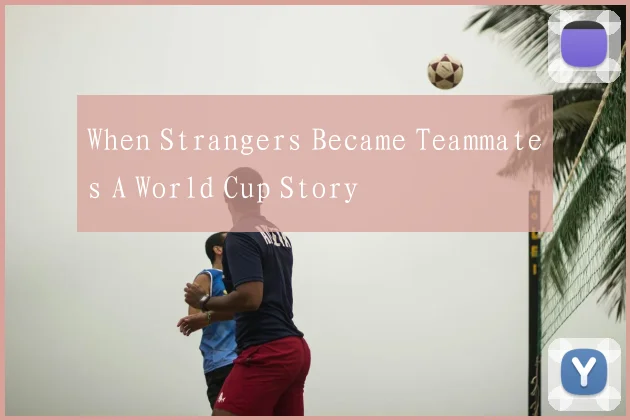
National team camps are often isolated, high-pressure environments. Players leave behind their club surroundings, families, and daily routines to live and breathe football with a new group. This seclusion, while challenging, forces interaction and bonding. Shared meals, hotel downtime, and grueling double training sessions become the crucible for relationships. A player might teach a teammate a phrase in his native tongue, while learning about another's cultural traditions. The common goal—to represent their nation and achieve World Cup success—overshadows individual differences, creating a powerful "us versus the world" mentality.
The Emergence of On-Field Chemistry
This budding camaraderie is tested and solidified on the training pitch. Drills and practice matches are where the theoretical becomes practical. That Japanese midfielder who played in Germany might instinctively understand the off-the-ball run of his striker, who plays in France, because they recognize patterns familiar from their club experiences in Europe. A tacit understanding develops through repetition and shared footballing IQ, often cultivated in similar high-level environments abroad. They begin to anticipate each other's movements, not because they are lifelong friends, but because they are professionals who speak the same footballing dialect, honed in the world's top leagues.
Iconic World Cup Stories of Unity
The history of the tournament is dotted with teams that embodied this journey from unfamiliarity to unity, often with English as a subtle thread in their tapestry.
The 2018 Belgian Golden Generation
Belgium's run to the semi-finals in 2018 was a masterclass in integrating diverse talents. Their squad featured players from Premier League, Serie A, La Liga, and Bundesliga backgrounds. Key players like Kevin De Bruyne (Manchester City) and Romelu Lukaku (then Manchester United) were Premier League pillars, while others like Eden Hazard (Chelsea) were equally fluent. Their coach, Roberto Martínez, conducted affairs largely in English. This shared language allowed for clear tactical dissemination of their potent counter-attacking style. The bond was visible: a team of stars subsumed their egos into a cohesive, devastatingly effective unit, their club rivalries left at the door of the national team.
The 2022 Moroccan Dream
Morocco's historic march to the 2022 semi-finals presented a different but equally powerful model. Coach Walid Regragui, himself multilingual, managed a squad born across multiple continents—Morocco, Europe, and North America. While French and Arabic were widely spoken, English played a significant role in integrating the diaspora. Players like Achraf Hakimi (PSG) and Hakim Ziyech (then Chelsea) were accustomed to English football environments. Regragui’s defensive organization and motivational messaging transcended language barriers, but a common technical vocabulary in English helped synchronize a defense that became the tournament's most formidable. They became brothers in arms, defending for each other with a unity that captivated the world.
The Multicultural Foundations of Modern Giants
Even traditional powerhouses exhibit this trend. The French national team, winners in 1998 and 2018, has long been a blend of cultures and ethnicities, with many players developing in English-speaking academies or leagues. The German and English squads themselves are increasingly multicultural, with players having diverse linguistic backgrounds. In these settings, English often serves as the neutral, functional tool for integrating all members into the tactical framework.
A Lasting Legacy Beyond the Final Whistle
The story that begins when strangers report for national team duty does not end with the tournament's conclusion. The bonds formed in the pressure cooker of a World Cup can last a lifetime. Teammates who were once merely familiar faces from opposing clubs become friends, connected by an unparalleled shared experience. They gain a profound respect for each other's cultures and professional journeys.
Furthermore, this experience enriches the global football ecosystem. Players return to their clubs with broadened perspectives, having learned different tactical nuances and problem-solving approaches from teammates shaped by other footballing cultures. The World Cup, in this sense, is the ultimate networking and knowledge-exchange forum for the sport's elite.
In the end, the World Cup story told in English—and in the universal language of sport—is one of human connection. It demonstrates that a common purpose can bridge any divide. On the pitch, 11 individuals from different worlds run as one, communicate as one, and strive as one. They are no longer strangers from foreign clubs; they are teammates writing their nation's history, proving that football's greatest victory is often the unity it inspires.